
 Emerging evidence
Overview
At a glance
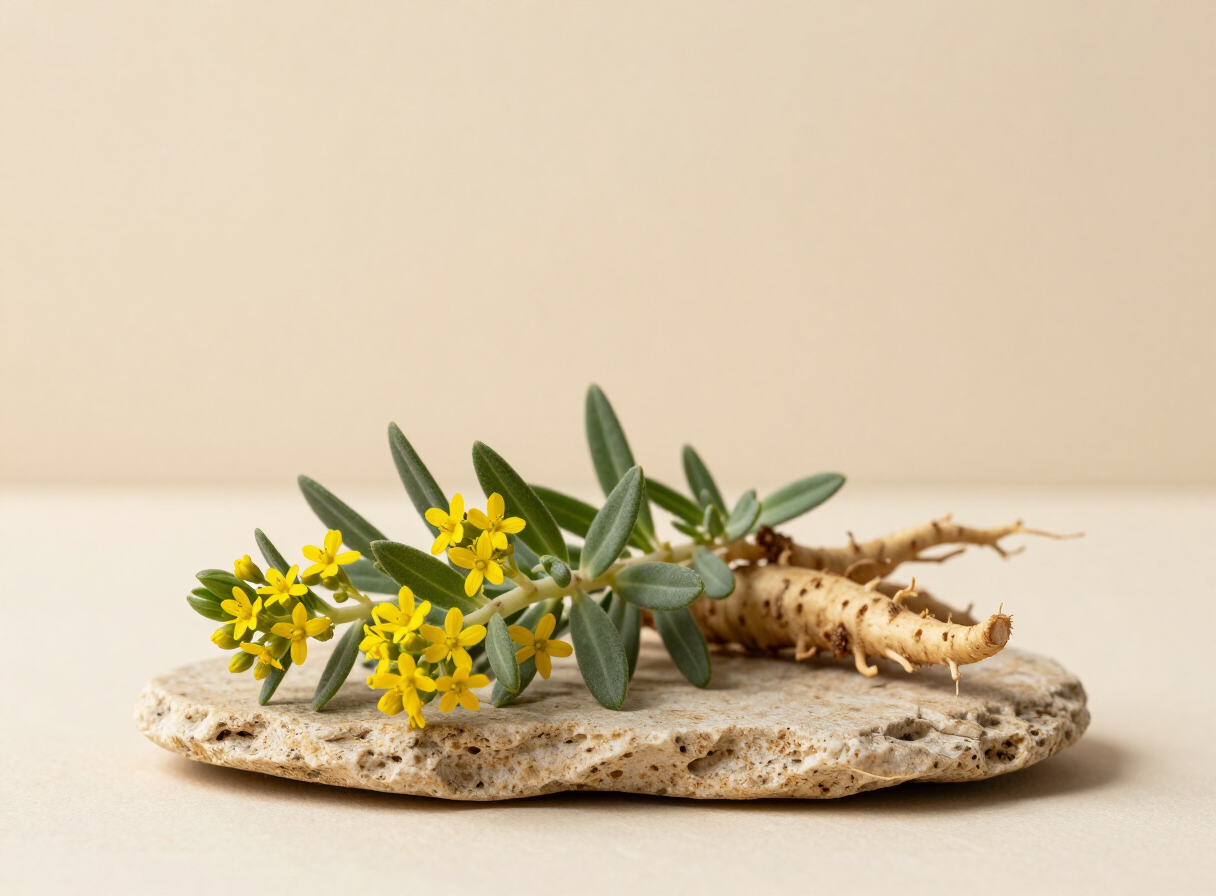
Rhodiola rosea is a species in the Crassulaceae family. Its root and rhizome have a history of traditional use, while current human evidence remains limited and heterogeneous.
Key takeaway
Rhodiola rosea is not one standardized intervention: species identity, root or rhizome material, powder or extract form, and any named standardization can change how a product should be compared with research.
Common uses studied
Stress-related outcomes studied in researchFatigue-related outcomes studied in researchEndurance-related outcomes studied in researchCognition, mood and sleep outcomes studied in research
Start here
What are you trying to figure out?
Pick the question closest to yours. Each card jumps to the relevant part of this profile or an existing HerbParlor tool — no sponsored rankings, no hidden ordering.
Identity
What is this herb?
Family
Crassulaceae
Species
Rhodiola rosea
Common names
Rhodiola
Plant parts used
RootRhizome
Identification notes
Rhodiola rosea should be distinguished from other Rhodiola species. The commonly used plant material is the root and rhizome; a label that only says Rhodiola does not by itself establish the species or preparation.
Background
Traditional context
Historical uses
Traditional use in herbal medicinal products
Rhodiola rosea root and rhizome have a history of traditional use in herbal medicinal products. This is traditional use, not proof of clinical efficacy.
Preparations
Forms & preparations
Forms
rootrhizomedried root/rhizomeextractstandardized extractcapsuletabletpowder
What changes between forms
- Rhodiola rosea should not be assumed equivalent to another Rhodiola species.
- Root and rhizome material, powder and extract are different preparation descriptions.
- Findings from a named standardized extract should not automatically be generalized to every Rhodiola product.
Rosavins and salidroside may appear as label or standardization concepts. Their presence or amount does not by itself show that one product is better or clinically equivalent to another.
Research
Research Explorer
Each question summarizes what human research has examined, how it was studied, and the main limitations — not a treatment recommendation.
What does the overall human evidence show?
Population
People studied in human Rhodiola rosea research.
Intervention
Different Rhodiola rosea preparations and extracts.
Comparator
Varies by study; commonly placebo or control.
Outcomes studied
StressFatigueCognitionMoodSleepPerformance-related outcomes
Evidence assessment
NCCIH states that there is not enough reliable evidence to determine whether Rhodiola is useful for any health-related purpose.
Limitations
- Limited evidence base
- Heterogeneous preparations and outcomes
- Small samples in many studies
- Short intervention periods
What did the 2025 endurance meta-analysis report?
Population
668 healthy participants across 26 randomized trials.
Intervention
Rhodiola preparations studied in endurance-related trials.
Comparator
Placebo or control.
Outcomes studied
Several endurance-related outcomesPerformance-related measures
Evidence assessment
The meta-analysis reported improvements in several endurance-related outcomes, but this individual synthesis does not by itself resolve overall evidence certainty or establish that all Rhodiola products have the same effects.
Limitations
- Healthy participants
- Differences between preparations and protocols
- Findings from one outcome area do not establish effects for diseases or other outcomes
What did the 2026 systematic review identify?
Population
Participants in Rhodiola rosea trials across several outcome areas.
Intervention
Rhodiola rosea preparations and extracts.
Comparator
Varies by trial.
Outcomes studied
StressFatigueCognitionMoodSleepPerformance-related outcomes
Evidence assessment
The review identified a small number of trials, but emphasized small samples, methodological heterogeneity and short intervention periods.
Limitations
- Small number of Rhodiola trials
- Small samples
- Methodological heterogeneity
- Short intervention periods
What did the 2014 randomized fatigue trial find?
Population
Nursing students in a randomized trial.
Intervention
Rhodiola rosea preparation studied in the trial.
Comparator
Control.
Outcomes studied
Fatigue-related outcomes
Evidence assessment
The findings did not support a simple positive fatigue narrative.
Limitations
- Specific study population
- Single randomized trial
- One study does not determine the overall evidence tier
Why does the named SHR-5 extract matter when reading the evidence?
Population
Participants in a 2009 randomized trial.
Intervention
The standardized SHR-5 extract specifically.
Comparator
Control.
Outcomes studied
Fatigue-related outcomes
Evidence assessment
The trial studied a named standardized extract specifically, demonstrating why its findings should not automatically be generalized to every Rhodiola product.
Limitations
- Specific named extract
- Specific trial design and population
- No automatic equivalence across products
Latest evidence
Recently published research
Looking for recent publications…
These publications are automatically discovered from Europe PMC. They have not necessarily been independently reviewed by HerbParlor and are not automatically incorporated into the evidence assessment.
Evidence
Evidence
Overall human evidence for Rhodiola rosea is limited and heterogeneous. NCCIH states that there is not enough reliable evidence to determine whether Rhodiola is useful for any health-related purpose. A 2025 meta-analysis of 26 randomized trials in 668 healthy participants reported improvements in several endurance-related outcomes, while a 2026 systematic review identified a small number of trials across stress, fatigue, cognition, mood, sleep and performance-related outcomes and noted small samples, methodological heterogeneity and short intervention periods. A 2014 randomized trial in nursing students produced findings that did not support a simple positive fatigue narrative. A 2009 randomized trial studied the standardized SHR-5 extract specifically, demonstrating why findings from a named extract should not automatically be generalized to every Rhodiola product.
Evidence tier
Emerging
Confidence
Overall certainty remains limited because the studies differ in preparation, population, outcome, methods and duration. Individual study or meta-analysis findings should be kept distinct from the overall evidence tier.
Last evidence review
2026-09-16
Where the evidence is strongest
Endurance-related outcomes in a 2025 meta-analysis
How to interpret this
Current evidence does not establish Rhodiola rosea as a proven treatment for depression, anxiety, chronic fatigue, hypertension, diabetes, cardiovascular disease or any other specific disease. The evidence is better described as limited, heterogeneous and preparation-dependent, with individual findings that should not be promoted beyond the populations, outcomes and products actually studied.
Automatic evidence update
Since the last editorial review
Checking for publications published since the last editorial evidence review…
This automatic update detects newly published literature; it does not replace HerbParlor's editorial evidence assessment. Review status is an automatic triage signal. Curated HerbParlor evidence is unchanged until editorial review.
Boundaries
What the evidence does NOT establish
Areas with limited evidence
- Depression
- Anxiety
- Chronic fatigue
- Hypertension
- Diabetes
- Cardiovascular disease
- Any other specific disease
Evidence gaps
- Better standardized species- and preparation-specific evidence
- Larger and longer randomized trials
- Consistent outcome definitions
- Direct comparisons between root powder, extracts and named standardized extracts
- Clinical relevance of endurance-related findings in healthy participants
Common misconceptions
- Rhodiola rosea is interchangeable with every Rhodiola species.
- Findings from the standardized SHR-5 extract automatically apply to every Rhodiola product.
- Higher rosavin or salidroside content is automatically better.
- An improvement in one trial establishes the overall evidence certainty.
- Current evidence establishes Rhodiola rosea as a proven treatment for depression, anxiety, chronic fatigue, hypertension, diabetes, cardiovascular disease or any other specific disease.
Safety
Safety & interactions
General considerations
- NCCIH reports that Rhodiola may be reasonably well tolerated for short-term use up to 12 weeks, but available safety information is limited.
Pregnancy & nursing
- Safety information during pregnancy is limited.
- Safety information during breastfeeding is limited.
Medication interactions to be aware of
Losartan
Reported adverse effects
- Dizziness
- Headache
- Insomnia
- Increased salivation
Duration
- NCCIH reports short-term tolerability information up to 12 weeks; longer-term safety information is limited.
Talk to a healthcare professional if any apply
- Pregnancy or breastfeeding
- Use of losartan
- Questions about using a Rhodiola product beyond the short-term safety information available
Products
What changes between products?
Form differences
- Rhodiola rosea should not be assumed equivalent to another Rhodiola species.
- Root and rhizome material, powder and extract are different preparation descriptions.
- Findings from a named standardized extract should not automatically be generalized to every Rhodiola product.
Form considerations
- Root powder and an extract are different preparation descriptions and should not be compared only by headline milligram amount.
- A product label should be compared with the actual preparation used in the relevant research.
Plant part considerations
- Check that the label identifies root and rhizome material and distinguishes Rhodiola rosea from other Rhodiola species.
Extract considerations
- Identify whether the product is described as powder, extract or standardized extract.
- Do not infer an extraction ratio or marker concentration when the label does not provide it.
Standardization considerations
- Record whether the label mentions rosavins or salidroside and how the product describes its standardization.
- Higher rosavin or salidroside content is not automatically better and does not by itself establish clinical equivalence.
Evaluation
How to evaluate a supplement
What to check
- Rhodiola rosea species identity
- Root and rhizome material
- Powder versus extract
- Named standardized extract, where stated
- Rosavins and salidroside as label or standardization concepts
- Additional ingredients
- Identity and contaminant testing
Serving considerations
- Compare the labelled serving and preparation with the intervention used in the research without inventing a dosage recommendation.
Testing considerations
- Look for identity and contaminant testing.
- Look for batch or lot traceability where available.
Label transparency
- The label should identify Rhodiola rosea, the root or rhizome material and the preparation type where available.
- Rosavins and salidroside should be treated as label or standardization information, not as automatic proof that a product is better.
Categories
Related categories
Explore the HerbParlor categories this herb is grouped under.
Herb profiles
More herb profiles
Keep exploring: other herbs and botanicals profiled on HerbParlor.
Sources
Authoritative sources referenced
- Rhodiola: Usefulness and Safety
National Center for Complementary and Integrative Health · accessed 2026-09-16
- European Union herbal monograph on Rhodiola rosea L., rhizoma et radix — Revision 1
European Medicines Agency · 2024-05-21 · accessed 2026-09-16
- Clinical evidence for the adaptogenic effects of Withania somnifera and Rhodiola rosea — A systematic review with molecular interpretation of psychometric outcomes
Annals of Agricultural and Environmental Medicine · 2026-03-25 · accessed 2026-09-16
- The effect of Rhodiola rosea supplementation on endurance performance and related biomarkers: a systematic review and meta-analysis
Frontiers in Nutrition · 2025-09-25 · accessed 2026-09-16
- Rhodiola rosea for mental and physical fatigue in nursing students: a randomized controlled trial
PLoS ONE · 2014-09-30 · accessed 2026-09-16
- A randomised, double-blind, placebo-controlled, parallel-group study of the standardised extract SHR-5 of the roots of Rhodiola rosea in the treatment of subjects with stress-related fatigue
Planta Medica · 2009-02-01 · accessed 2026-09-16
Sections reviewed
overviewbotanicaltraditionalContextpreparationsresearchevidencesafetyproductEvaluationrelationshipssources
Created the canonical Rhodiola rosea Herb Profile v1 with species-aware identity, traditional-use context, preparation distinctions, evidence boundaries, conservative safety information and source-linked research context.
Regulatory sources are included for context only. Regulatory status is not evidence for or against efficacy, and is not a treatment or safety recommendation.
This profile is provided for educational purposes only and is not medical advice. Traditional context and research summaries are distinguished from claims, and nothing here is a treatment recommendation. Always consult a qualified healthcare professional before using any herb, especially if you are pregnant, nursing, take medication, or have a medical condition.