
 Emerging evidence
Ginkgo Biloba
Ginkgo biloba L.
Overview
At a glance
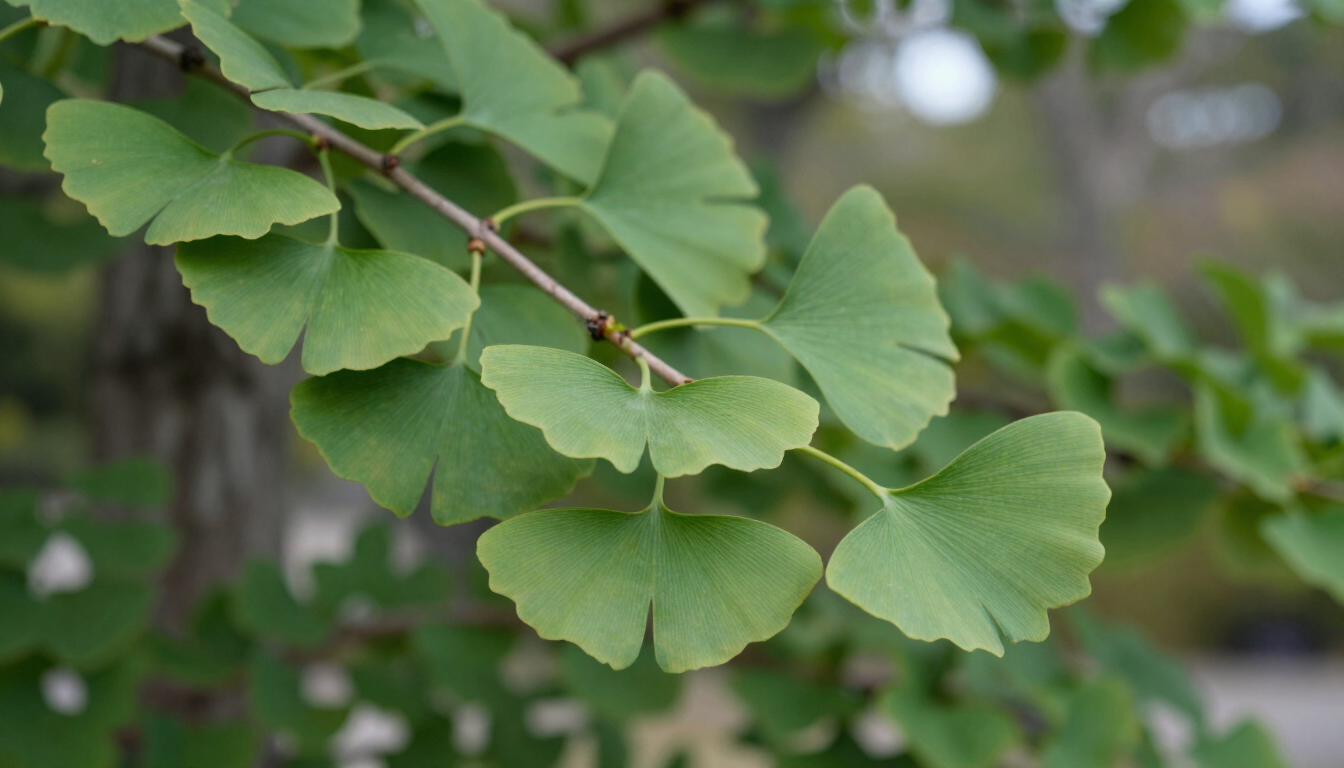
Ginkgo biloba L. is an ancient deciduous tree whose fan-shaped leaves are the principal material used in contemporary supplements. Human research spans dementia, cognitive performance and tinnitus, but evidence is highly preparation- and outcome-dependent.
Key takeaway
Ginkgo has a large human research literature, but findings are highly preparation- and outcome-dependent. Findings for standardized extracts cannot automatically be generalized to ordinary leaf powders, teas, raw leaf products or unrelated combination formulas.
Common uses studied
Traditional and historical herbal useDementia and cognitive-impairment researchCognitive-performance researchTinnitus researchCommercial Ginkgo leaf preparations
Start here
What are you trying to figure out?
Pick the question closest to yours. Each card jumps to the relevant part of this profile or an existing HerbParlor tool — no sponsored rankings, no hidden ordering.
Identity
What is this herb?
Family
Ginkgoaceae
Species
Ginkgo biloba L.
Common names
Ginkgo BilobaGinkgoMaidenhair treeFossil treeJapanese silver apricot
Plant parts used
Leaf
Geographic context
Ginkgo biloba is an ancient tree species now widely cultivated beyond its native historical range.
Identification notes
Ginkgo biloba L. is the canonical species for this profile. Ginkgo leaf, Maidenhair tree, Fossil tree and Japanese silver apricot are identity or common-name terms, not separate entities. The fan-shaped leaves are the principal modern herbal material; seeds and other plant material should be distinguished from leaf products.
Background
Traditional context
Traditions
East Asian historical and herbal-medicine context
Historical uses
Historical use of Ginkgo biloba leaves and other identified plant materialHistorical and traditional use in East Asian contexts
Traditional or historical use provides cultural and botanical context, not proof of clinical efficacy. Clinical conclusions should be based on the specific human evidence and preparation studied.
Preparations
Forms & preparations
Forms
Dried leafLeaf powderDry extractStandardized extractLiquid preparationCapsuleTabletTea
Preparation methods
Dried leaf materialPowdered or comminuted leafDry extract preparationLiquid extraction where disclosedStandardized extract preparation where disclosed
What changes between forms
- Dried leaf powder and dry extract are distinct preparations and should not be treated as interchangeable.
- A standardized extract studied in clinical research is not automatically equivalent to an ordinary Ginkgo leaf powder, tea or another commercial preparation.
- Capsules, tablets, liquids and teas may contain different amounts and preparations of leaf material.
- Crude plant material should not automatically be equated with a standardized leaf extract.
- Combination formulas should not automatically be treated as evidence for Ginkgo alone.
Clinical research often concerns identified standardized extracts such as EGb 761, while commercial products may contain leaf powder, other extracts or combination formulas. Evidence should be interpreted at the level of the preparation actually studied.
Research
Research Explorer
Each question summarizes what human research has examined, how it was studied, and the main limitations — not a treatment recommendation.
What does human evidence show about Ginkgo and dementia prevention?
Population
Adults studied for the prevention of dementia or cognitive decline.
Intervention
Ginkgo biloba preparations, including standardized extracts where specified.
Comparator
Placebo or control interventions where used.
Outcomes studied
Incident dementiaCognitive declineAdverse events
Evidence assessment
Large studies have not demonstrated a preventive benefit for dementia. The existence of a substantial research literature should not be interpreted as proof that Ginkgo prevents dementia.
Limitations
- Different populations, preparations and durations have been studied.
- Prevention outcomes are distinct from treatment of symptoms in people who already have dementia.
- Findings for a particular standardized extract should not automatically be generalized to every Ginkgo product.
What does the evidence show about symptoms in dementia or cognitive impairment?
Population
People with dementia or cognitive impairment represented in clinical research.
Intervention
Ginkgo biloba preparations, including identified standardized extracts where specified.
Comparator
Placebo, usual care or control interventions where used.
Outcomes studied
Cognitive symptomsActivities of daily livingBehavioural or neuropsychiatric symptomsAdverse events
Evidence assessment
Evidence for symptoms and cognition in dementia or cognitive impairment is mixed and preparation-specific. A pooled analysis concerning EGb 761 in a specific subgroup following cerebral infarction should not be treated as evidence for every Ginkgo product or every person with dementia.
Limitations
- Different diagnoses, subgroups, outcomes and preparations were studied.
- Clinical significance and study quality vary across the evidence base.
- The 2026 EGb 761 analysis includes declared manufacturer involvement or funding and is not independent confirmation.
Does Ginkgo improve cognitive performance in otherwise healthy adults?
Population
Otherwise healthy adults studied for cognitive-performance outcomes.
Intervention
Ginkgo biloba preparations as described in the relevant studies.
Comparator
Placebo or control interventions where used.
Outcomes studied
MemoryAttentionExecutive or other cognitive performance measures
Evidence assessment
Evidence for improved cognitive performance in otherwise healthy adults is uncertain. Isolated findings or mechanistic rationale do not establish Ginkgo as a general cognitive enhancer.
Limitations
- Studies vary in preparation, outcome, duration and participant characteristics.
- Multiple cognitive tests can produce inconsistent or difficult-to-interpret findings.
- Findings for dementia or cognitive impairment should not be transferred to healthy adults.
What does the human evidence show about tinnitus?
Population
People with tinnitus represented in clinical trials and systematic reviews.
Intervention
Ginkgo biloba preparations, including extracts where specified.
Comparator
Placebo, control or other interventions where used.
Outcomes studied
Tinnitus severityTinnitus-related quality of lifeAdverse events
Evidence assessment
Tinnitus findings are limited and inconsistent. The Cochrane review judged the certainty of evidence to be very low, with important uncertainty and risk-of-bias limitations; a recent review of OTC treatments also emphasizes inconsistent findings and limited evidence.
Limitations
- Trials differ in tinnitus populations, preparations and outcome measures.
- Risk of bias and imprecision limit confidence in the findings.
- Evidence for a particular extract does not automatically apply to ordinary leaf products or combination formulas.
How preparation-specific are findings from standardized extracts such as EGb 761?
Population
People comparing commercial Ginkgo products with preparations studied in human research.
Intervention
Identified standardized Ginkgo extracts such as EGb 761 and other Ginkgo preparations where specified.
Comparator
Different Ginkgo biloba preparations or placebo where used.
Outcomes studied
Preparation identityExtract compositionEvidence interpretabilitySafety context
Evidence assessment
Findings from standardized extracts such as EGb 761 are preparation-specific. They cannot automatically be generalized to ordinary leaf powder, dried leaf, tea, raw leaf products, other extracts or unrelated combination formulas.
Limitations
- Commercial labels may not identify the same extract or composition.
- Dried leaf powder and dry extract are distinct preparations.
- Clinical studies do not represent one uniform Ginkgo intervention.
How consistent is the evidence across outcomes and study designs?
Population
Adults represented across the Ginkgo biloba human clinical literature.
Intervention
Ginkgo biloba leaf products and identified extracts studied in humans.
Comparator
Varies by study and review.
Outcomes studied
Dementia preventionDementia symptoms and cognitionHealthy cognitionTinnitusAdverse events
Evidence assessment
The evidence is not uniform across outcomes or study designs. Dementia prevention has not shown a demonstrated benefit in large studies; dementia symptoms and cognition remain mixed and preparation-specific; healthy cognition is uncertain; and tinnitus evidence is limited and inconsistent. Other proposed uses should not be treated as proven merely because Ginkgo has been studied.
Limitations
- Variation in preparation, population, comparator and outcome measures.
- Risk of bias, imprecision and selective interpretation can affect conclusions.
- A large number of studies does not automatically mean strong or consistent evidence.
Latest evidence
Recently published research
Looking for recent publications…
These publications are automatically discovered from Europe PMC. They have not necessarily been independently reviewed by HerbParlor and are not automatically incorporated into the evidence assessment.
Evidence
Evidence
Ginkgo biloba has a large human research literature, but evidence varies substantially by outcome, preparation and study design. Large studies have not demonstrated dementia-prevention benefit; evidence for dementia symptoms and cognition is mixed and preparation-specific; healthy-cognition findings are uncertain; and tinnitus evidence is limited and inconsistent, with very-low certainty in the Cochrane review. Other proposed uses are not established merely because they have been studied.
Evidence tier
Emerging
Confidence
Overall confidence is emerging but limited. The main uncertainties concern preparation identity, extract composition, population, outcome, study quality and clinical significance. EGb 761 findings should not be generalized to every Ginkgo product, and the 2026 subgroup analysis with declared manufacturer involvement or funding should not be treated as independent confirmation.
Last evidence review
2026-09-20
Where the evidence is strongest
Preparation-aware synthesis of Ginkgo human evidenceClearer separation of dementia prevention, dementia symptoms, healthy cognition and tinnitus outcomes
How to interpret this
Ginkgo evidence should be interpreted at the level of the identified species, plant part, preparation, extract identity, population and outcome studied. Do not use a blanket statement that Ginkgo works for cognition, and do not treat the existence of many studies as evidence of effectiveness.
Automatic evidence update
Since the last editorial review
Checking for publications published since the last editorial evidence review…
This automatic update detects newly published literature; it does not replace HerbParlor's editorial evidence assessment. Review status is an automatic triage signal. Curated HerbParlor evidence is unchanged until editorial review.
Boundaries
What the evidence does NOT establish
Areas with limited evidence
- Broad claims that Ginkgo improves cognition
- Generalization from EGb 761 to ordinary leaf powders, teas or other products
- Tinnitus treatment claims
- Other proposed uses without outcome-specific evidence
Evidence gaps
- Direct comparisons between standardized extracts, leaf powders and other commercial preparations
- Independent, well-described trials with clinically meaningful outcomes
- Longer-term safety and interaction characterization across preparations
- Consistent evidence for tinnitus and healthy cognitive performance
Common misconceptions
- More Ginkgo does not automatically mean better evidence.
- Leaf powder is not automatically equivalent to a standardized extract.
- A study of EGb 761 does not validate every Ginkgo product.
- “Brain health” marketing is not clinical evidence.
- Many studies do not automatically mean strong evidence.
- Traditional use is not proof of efficacy.
- Ginkgo has not been shown to prevent dementia.
- Raw Ginkgo seeds are not interchangeable with properly prepared leaf products.
Safety
Safety & interactions
General considerations
- Ginkgo products can differ substantially by plant part and preparation. Crude plant material should not automatically be equated with a standardized leaf extract.
- Ginkgo may raise bleeding-risk or interaction concerns, including for people taking anticoagulants such as warfarin. The available evidence does not justify an exhaustive interaction list here.
- Raw or fresh Ginkgo seeds are toxic and are not interchangeable with properly prepared leaf products.
Pregnancy & nursing
- Pregnancy and breastfeeding safety is uncertain; safety should not be assumed for every Ginkgo preparation.
- People who are pregnant or breastfeeding should discuss a specific product with a qualified healthcare professional.
Medication interactions to be aware of
Ginkgo may present bleeding-risk or interaction concerns with anticoagulants such as warfarin. People taking medicines should discuss a specific product with a qualified healthcare professional.
Condition considerations
- People with bleeding or clotting concerns, or those preparing for a procedure, should seek professional advice about a specific product.
- Uncertainty is greater when a product does not identify its plant part, extract identity or composition.
Reported adverse effects
- Dizziness
- Gastrointestinal symptoms
- Headache
Duration
- Long-term safety and interaction information can vary by preparation and is not equally established for every commercial product.
Talk to a healthcare professional if any apply
- Pregnancy or breastfeeding
- Use of anticoagulants such as warfarin or other prescription medicines
- Bleeding or clotting concerns
- Upcoming procedure or surgery
- Use of raw or fresh Ginkgo seeds
- Uncertainty about plant part or extract composition
Products
What changes between products?
Form differences
- Dried leaf powder and dry extract are distinct preparations and should not be treated as interchangeable.
- A standardized extract studied in clinical research is not automatically equivalent to an ordinary Ginkgo leaf powder, tea or another commercial preparation.
- Capsules, tablets, liquids and teas may contain different amounts and preparations of leaf material.
- Crude plant material should not automatically be equated with a standardized leaf extract.
- Combination formulas should not automatically be treated as evidence for Ginkgo alone.
Form considerations
- Leaf powder, dry extract, liquid preparations, capsules, tablets and teas can represent different underlying preparations.
- Do not compare products solely by package size, headline Ginkgo amount or extract mass.
Plant part considerations
- Confirm that the product uses identified Ginkgo biloba leaf material when that is the intended preparation.
- Do not treat Ginkgo seeds or unspecified plant material as equivalent to prepared leaf products.
Extract considerations
- Record extraction method and extract identity only when the product source explicitly provides them.
- Do not infer an extraction ratio, concentration or clinical equivalence from a label that does not provide it.
Standardization considerations
- Record declared standardization only when genuinely disclosed.
- Record marker constituents only when the product source specifies them.
- Do not create a preferred extract specification or imply that standardization automatically means greater efficacy.
Evaluation
How to evaluate a supplement
What to check
- Ginkgo biloba species identity
- Plant part, especially leaf versus seed or unspecified plant material
- Powder versus dry extract, liquid preparation or other form
- Extraction information where disclosed
- Standardization where disclosed
- Marker constituents only when genuinely specified
- Amount per serving and serving information
- Whether the product is Ginkgo alone or a combination formula
- Label transparency and extract identity/composition
- Testing and batch or lot provenance where disclosed
Serving considerations
- Compare the labelled preparation and serving with the intervention used in the relevant research without inventing a dosage recommendation.
- A larger declared amount does not automatically mean a stronger or better-supported product.
Testing considerations
- Look for species and plant-part identity testing where disclosed.
- Look for extract identity, composition, contaminant testing and batch or lot traceability where disclosed.
- Treat testing and provenance information as product-quality disclosure, not proof of clinical efficacy.
Label transparency
- The species and plant part should be clear where possible.
- Powder, extract, liquid and other preparation details should be explicit.
- Standardization and marker constituents should be specific and sourceable when claimed.
- Combination ingredients should be listed.
- Marketing language should not be treated as human clinical evidence.
Supplements
Related supplements
- Pharma Nord Bio-Biloba, 90 tabletterPharma NordView product
- A. Vogel Ginkgo Biloba, 100 mlA. VogelView product
- Camette Ginkgo biloba 100 mg, 90 tabCametteView product
- Lekaform Gingko Biloba, 100 tablLekaformView product
- Solaray Ginkgo Biloba Leaf Extract, 60 mg, 60 CapsSolarayView product
- Nature's Answer Ginkgo Standardized, 80 mg, 60 Veg CapsNature's AnswerView product
- NOW Foods Ginkgo Biloba 60 mg, 24% Standardized Extract, 60 CapsNOW FoodsView product
- Source Naturals Ginkgo-24 Biloba Extract, 120 mg, 60 TabsSource NaturalsView product
- Life Extension Ginkgo Biloba Certified Extract, 120 mg, 365 Veg CapsLife ExtensionView product
- Herb Pharm Ginkgo, 1 OzHerb PharmView product
Sources
Authoritative sources referenced
- Ginkgo biloba L. — Plants of the World Online
Royal Botanic Gardens, Kew · accessed 2026-09-20
- Ginkgo leaf (Ginkgo biloba) — European Medicines Agency herbal monograph
European Medicines Agency · accessed 2026-09-20
- Ginkgo — health information
National Center for Complementary and Integrative Health · accessed 2026-09-20
- Ginkgo biloba for tinnitus — Cochrane review / PubMed
Cochrane / PubMed · accessed 2026-09-20
- Ginkgo biloba extract EGb 761 — overview of systematic reviews / PubMed
PubMed · accessed 2026-09-20
- Over-the-counter tinnitus treatments, including Ginkgo — systematic review / PubMed
PubMed · accessed 2026-09-20
- EGb 761 in a specific subgroup of patients with dementia following cerebral infarction — pooled analysis / PubMed
PubMed · accessed 2026-09-20
Sections reviewed
overviewbotanicaltraditionalContextpreparationsresearchevidencesafetyproductEvaluationrelationshipssources
Created the Ginkgo Biloba Herb Profile v1 with canonical Ginkgo biloba L. identity, leaf-versus-seed distinctions, preparation-aware human evidence across dementia, cognition and tinnitus, cautious safety framing, transparent manufacturer-involvement qualification, product-evaluation criteria and auditable review metadata.
This profile is provided for educational purposes only and is not medical advice. Traditional context and research summaries are distinguished from claims, and nothing here is a treatment recommendation. Always consult a qualified healthcare professional before using any herb, especially if you are pregnant, nursing, take medication, or have a medical condition.