
 Emerging evidence
Moringa
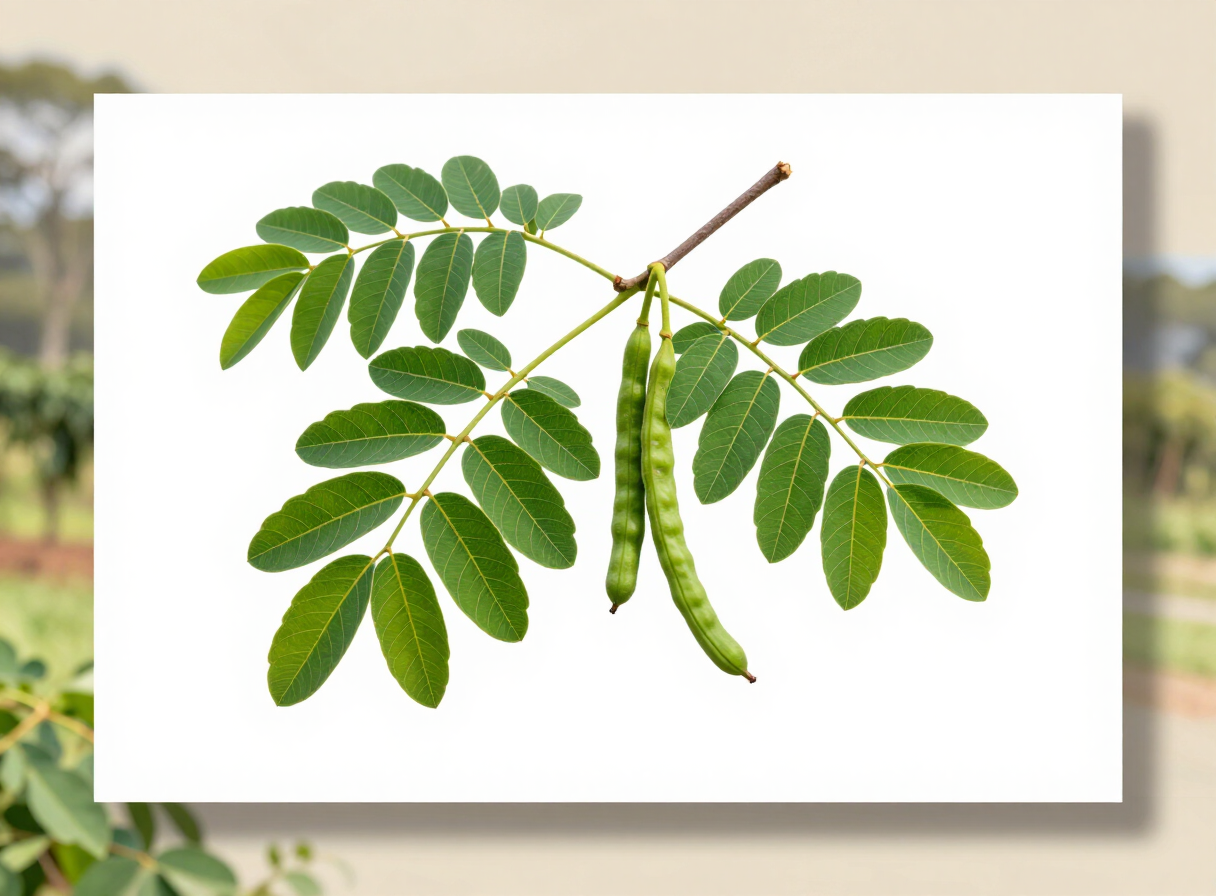
Moringa oleifera Lam.
Overview
At a glance
Moringa oleifera is a multipurpose botanical and food plant. Human research has examined leaves and other preparations in metabolic-health contexts, but the evidence remains limited, heterogeneous and preparation-dependent.
Key takeaway
Moringa is not one uniform intervention: plant part, preparation, product form and the outcome studied all matter, and current human evidence does not establish broad therapeutic efficacy.
Common uses studied
Nutritional/food useTraditional herbal useMetabolic-health research
Start here
What are you trying to figure out?
Pick the question closest to yours. Each card jumps to the relevant part of this profile or an existing HerbParlor tool — no sponsored rankings, no hidden ordering.
Identity
What is this herb?
Family
Moringaceae
Species
Moringa oleifera Lam.
Common names
MoringaDrumstick tree
Plant parts used
LeavesSeedsOther plant material where explicitly identified
Geographic context
Kew records the native range of Moringa oleifera in northeastern India and Pakistan. The species is now widely cultivated as a food and multipurpose tree.
Identification notes
This profile refers to the accepted species Moringa oleifera Lam. A product labelled only as “moringa” may not identify its plant part or preparation, and unrelated commercial ingredients or combination formulas should not automatically be treated as equivalent.
Background
Traditional context
Traditions
Traditional food useTraditional herbal use
Historical uses
Use of Moringa oleifera leaves and other plant material in food and traditional preparationsUse of Moringa oleifera in traditional health practices described in review literature
Traditional and food use provide cultural and nutritional context, not proof that Moringa treats diabetes, hypertension, obesity or another disease.
Preparations
Forms & preparations
Forms
Leaf powderLeaf extractCapsules or tabletsFood or culinary preparationsTeaLiquid products
Preparation methods
Dried and powdered leaf materialExtract preparation where disclosedFood preparation using identified Moringa oleifera material
What changes between forms
- Different plant parts, including leaves and seeds, are not automatically interchangeable.
- Leaf powder and concentrated extracts are not automatically equivalent preparations.
- Capsules, tablets, tea and liquid products may contain different amounts and preparations of plant material.
- Combination formulas should not automatically be treated as evidence for Moringa alone.
Human studies have used different Moringa oleifera preparations, with leaf powder prominent in the available metabolic-health literature. Findings from a specific powder, extract or food preparation should not automatically be generalized to every Moringa product.
Research
Research Explorer
Each question summarizes what human research has examined, how it was studied, and the main limitations — not a treatment recommendation.
What does current human evidence say about Moringa and blood glucose?
Population
Adults included in clinical studies of Moringa oleifera preparations, including populations studied for metabolic outcomes.
Intervention
Moringa oleifera preparations, including leaf powder and leaf extract preparations where specified.
Comparator
Placebo, control or comparator intervention where used.
Outcomes studied
Fasting blood glucoseGlycated haemoglobinInsulin-related measuresOther glycemic outcomes
Evidence assessment
Human findings concerning blood glucose are emerging but inconsistent. Some studies report changes in selected glycemic outcomes, while others do not; the evidence is limited by small studies, differing populations, preparations, durations and outcome measures. It does not establish Moringa as a treatment for diabetes.
Limitations
- Limited and heterogeneous human study base
- Different plant parts and preparations
- Variation in populations, background care and outcomes
- Findings cannot be generalized to every Moringa product
Sources
- Effects of Moringa oleifera Lam. supplementation on cardiometabolic outcomes: meta-analysis of randomized controlled trials
- Effects of Moringa oleifera leaf extract on glycemic control and inflammation in metabolic syndrome: a randomized controlled trial
- Moringa oleifera Lam. as a potential plant for alleviation of the metabolic syndrome—a narrative review based on in vivo and clinical studies
What does current evidence say about Moringa and blood pressure or cardiometabolic outcomes?
Population
Adults included in randomized trials and reviews of Moringa oleifera supplementation.
Intervention
Moringa oleifera leaf and other preparations as described in each study.
Comparator
Placebo or control intervention where used.
Outcomes studied
Blood pressureBlood lipidsGlycemic measuresInflammatory or other cardiometabolic markers
Evidence assessment
Cardiometabolic findings are emerging and heterogeneous. Reviews have examined blood pressure and metabolic outcomes, but variation between preparations and studies limits confidence in any broad effect. Moringa has not been established as a treatment for hypertension or cardiometabolic disease.
Limitations
- Small or clinically diverse trials
- Different preparations and study populations
- Biomarker findings do not automatically demonstrate clinical benefit
- Low or very-low certainty may apply to individual outcomes
Sources
- Effects of Moringa oleifera Lam. supplementation on cardiometabolic outcomes: meta-analysis of randomized controlled trials
- The Effect of Moringa oleifera on Body Weight and Blood Pressure: A Systematic Review and Meta-Analysis of Randomized Controlled Trials.
- Effects of Moringa oleifera leaf extract on glycemic control and inflammation in metabolic syndrome: a randomized controlled trial
Does Moringa affect body weight or body composition?
Population
Adults included in clinical studies of Moringa oleifera supplementation and body-weight outcomes.
Intervention
Moringa oleifera preparations, including leaf-based preparations where specified.
Comparator
Placebo or control intervention where used.
Outcomes studied
Body weightBody-mass indexWaist circumferenceOther anthropometric measures
Evidence assessment
Evidence concerning body weight and body composition remains limited and uncertain. Any reported changes are preparation-, population- and study-dependent and do not establish Moringa as a weight-loss treatment.
Limitations
- Few relevant human studies
- Variation in duration and background interventions
- Anthropometric outcomes are not the same as meaningful long-term health outcomes
Sources
- The Effect of Moringa oleifera on Body Weight and Blood Pressure: A Systematic Review and Meta-Analysis of Randomized Controlled Trials.
- Effects of Moringa oleifera Lam. supplementation on cardiometabolic outcomes: meta-analysis of randomized controlled trials
- Moringa oleifera Lam. as a potential plant for alleviation of the metabolic syndrome—a narrative review based on in vivo and clinical studies
How much confidence should be placed in Moringa human clinical evidence?
Population
Adults represented across the available Moringa oleifera human clinical literature.
Intervention
Moringa oleifera preparations studied in human research.
Comparator
Varies by study and review.
Outcomes studied
Clinical outcomesBiomarkersAdverse eventsStudy certainty and limitations
Evidence assessment
Overall confidence is low to emerging rather than established. The human literature is heterogeneous, with uncertainty related to preparation, sample size, study quality, duration and outcome selection. Mechanistic, animal and traditional-use findings should not be treated as equivalent to human clinical evidence.
Limitations
- Insufficiently consistent preparation-specific evidence
- Small samples and short follow-up in parts of the literature
- Risk of overinterpreting surrogate or biomarker outcomes
- Limited ability to infer effects for commercial products
Sources
- Moringa oleifera: a systematic review of its botany, traditional uses, phytochemistry, pharmacology and toxicity
- Effects of Moringa oleifera Lam. supplementation on cardiometabolic outcomes: meta-analysis of randomized controlled trials
- The Effect of Moringa oleifera on Body Weight and Blood Pressure: A Systematic Review and Meta-Analysis of Randomized Controlled Trials.
- Moringa oleifera Lam. as a potential plant for alleviation of the metabolic syndrome—a narrative review based on in vivo and clinical studies
What changes between Moringa leaf powder, extracts and other preparations?
Population
People comparing Moringa oleifera food products and commercial preparations with human research interventions.
Intervention
Leaf powder, leaf extract, capsules, tablets, tea, liquid and other identified preparations.
Comparator
Different Moringa oleifera plant parts or preparations.
Outcomes studied
Preparation identityAmount disclosedEvidence interpretabilitySafety context
Evidence assessment
Plant part and preparation are central to interpretation. A leaf powder, a concentrated extract, a seed preparation, a tea and a combination product may differ in composition and amount; evidence for one should not automatically be applied to another.
Limitations
- Commercial labels may omit preparation details
- Studies do not use one uniform Moringa intervention
- Standardization is not consistently disclosed or comparable
Latest evidence
Recently published research
Looking for recent publications…
These publications are automatically discovered from Europe PMC. They have not necessarily been independently reviewed by HerbParlor and are not automatically incorporated into the evidence assessment.
Evidence
Evidence
Human research on Moringa oleifera includes randomized trials and reviews of metabolic-health outcomes, but the evidence remains limited, heterogeneous and preparation-dependent. Some studies report changes in glycemic, blood-pressure, lipid or anthropometric outcomes, while findings are not uniform and certainty is often low or very low. Current evidence does not establish Moringa as a treatment for diabetes, hypertension, obesity or another disease.
Evidence tier
Emerging
Confidence
Overall confidence is emerging but limited. The main uncertainties concern plant part, preparation, amount, study population, duration, outcome selection and methodological quality. Evidence from a particular leaf powder or extract should not automatically be generalized to every Moringa product.
Last evidence review
2026-09-19
Where the evidence is strongest
Preparation-aware synthesis of emerging human metabolic-health researchIdentification of consistent limitations across small and heterogeneous studies
How to interpret this
Moringa evidence should be interpreted at the level of the identified species, plant part, preparation, amount and outcome studied. The current human literature is emerging and heterogeneous; it does not justify broad therapeutic claims or dosage recommendations.
Automatic evidence update
Since the last editorial review
Checking for publications published since the last editorial evidence review…
This automatic update detects newly published literature; it does not replace HerbParlor's editorial evidence assessment. Review status is an automatic triage signal. Curated HerbParlor evidence is unchanged until editorial review.
Boundaries
What the evidence does NOT establish
Areas with limited evidence
- Broad claims about blood glucose, blood pressure or body weight
- Generalization across plant parts and preparations
- Long-term clinical outcomes and safety of concentrated extracts
- Translation from biomarkers or preclinical findings to patient-important outcomes
Evidence gaps
- Larger, longer and well-described randomized trials
- Direct comparisons of leaf powder, extracts and other preparations
- Consistent reporting of plant part, amount and extract characteristics
- Independent confirmation of clinically meaningful outcomes
- Better characterization of safety across concentrated products
Common misconceptions
- Moringa is automatically equivalent to every “superfood” claim.
- Nutritional value proves therapeutic efficacy.
- Leaf powder and concentrated extracts are automatically interchangeable.
- Animal or in-vitro findings are equivalent to human clinical evidence.
- A product containing Moringa automatically reproduces findings from a specific clinical preparation.
- Moringa is an established treatment for diabetes, hypertension or obesity.
- More Moringa is automatically better.
- Traditional use or a mechanism of action proves a clinical benefit.
Safety
Safety & interactions
General considerations
- Toxicity and safety evidence for Moringa oleifera is described in review literature but is not sufficiently characterized to justify blanket claims of safety across every concentrated extract or commercial product.
- Safety findings should be interpreted according to the plant part, preparation, amount, duration and population studied.
- Human clinical evidence includes limited and heterogeneous safety reporting, so absence of a reported problem in one study should not be generalized to all products.
Pregnancy & nursing
- Pregnancy and breastfeeding safety should not be assumed for every Moringa preparation, particularly concentrated extracts.
- People who are pregnant or breastfeeding should discuss a specific product with a qualified healthcare professional.
Medication interactions to be aware of
The available sources do not establish a complete interaction profile for every Moringa preparation. People taking medicines should discuss a specific product with a qualified healthcare professional rather than infer safety from nutritional or traditional use.
Condition considerations
- People with diabetes, blood-pressure conditions or other medical conditions should not use this profile as a substitute for clinical care.
- Uncertainty is greater when a product does not identify its plant part, preparation or amount.
Duration
- Long-term safety of concentrated Moringa extracts is not sufficiently established by the available sources.
Talk to a healthcare professional if any apply
- Pregnancy or breastfeeding
- Use of prescription medicines
- Diabetes, blood-pressure conditions or other relevant medical conditions
- Use of a concentrated extract with unclear composition
- Significant or unexpected adverse effects
Products
What changes between products?
Form differences
- Different plant parts, including leaves and seeds, are not automatically interchangeable.
- Leaf powder and concentrated extracts are not automatically equivalent preparations.
- Capsules, tablets, tea and liquid products may contain different amounts and preparations of plant material.
- Combination formulas should not automatically be treated as evidence for Moringa alone.
Form considerations
- Leaf powder, leaf extract, tea and liquid products can represent different amounts and preparations.
- Do not compare products solely by package size or headline Moringa weight.
Plant part considerations
- Confirm which Moringa oleifera plant part is used.
- Do not treat leaves, seeds and unspecified “whole plant” material as automatically equivalent.
Extract considerations
- Record extract characteristics only when the product source explicitly provides them.
- Do not infer an extraction ratio, concentration or clinical equivalence from a label that does not provide it.
Standardization considerations
- Record declared standardization only when genuinely disclosed.
- Do not invent a preferred marker, threshold or extract ratio.
- Do not imply that a standardized product is automatically more effective.
Evaluation
How to evaluate a supplement
What to check
- Moringa oleifera species identity
- Plant part, such as leaf or seed, where disclosed
- Powder, extract, tea, liquid or other preparation
- Amount per serving and serving information
- Extract characteristics where explicitly disclosed
- Standardization only where genuinely disclosed
- Whether the product is Moringa alone or a combination formula
- Other ingredients and label transparency
- Identity, contaminant and batch testing where disclosed
Serving considerations
- Compare the labelled amount and preparation with the intervention used in the relevant research without inventing a dosage recommendation.
- A larger declared amount does not automatically mean a stronger or better-supported product.
Testing considerations
- Look for species and plant-part identity testing where disclosed.
- Look for contaminant testing and batch or lot traceability where disclosed.
- Treat testing information as a product-quality disclosure, not as proof of clinical efficacy.
Label transparency
- The species should be identifiable where possible.
- The plant part and preparation should be clear.
- The amount per serving should be explicit.
- Combination ingredients should be listed.
- Extract or standardization claims should be specific and sourceable.
- Marketing language should not be treated as human clinical evidence.
Supplements
Related supplements
- Unik Food Moringa Pulver (200 g)Unik FoodView product
- Pureviva Moringa Pulver (250 g)PurevivaView product
- Dragon Superfood Moringa Pulver (200 g)Dragon SuperfoodView product
- Teministeriet Supertea Moringa (20 breve)TeministerietView product
- Solaray Moringa 900 mg, 60 Veg CapsSolarayView product
- Source Naturals Moringa Extract 600 mg, 60 TabsSource NaturalsView product
- Organic India Moringa, 90 Veg CapsOrganic IndiaView product
- NOW Foods Organic Moringa Leaf, 90 VegCapsNOW FoodsView product
- Futurebiotics Moringa 5000 mg, 60 VegicapsFuturebioticsView product
- Organic India Moringa Green Superfood, 8 OzOrganic IndiaView product
Sources
Authoritative sources referenced
- Moringa oleifera Lam. — Plants of the World Online
Royal Botanic Gardens, Kew · accessed 2026-09-19
- Moringa oleifera: a systematic review of its botany, traditional uses, phytochemistry, pharmacology and toxicity
Journal of Pharmacy and Pharmacology / PubMed · 2022-03-03 · accessed 2026-09-19
- Effects of Moringa oleifera Lam. supplementation on cardiometabolic outcomes: meta-analysis of randomized controlled trials
Nutrients / PubMed · 2025-11-07 · accessed 2026-09-19
- The Effect of Moringa oleifera on Body Weight and Blood Pressure: A Systematic Review and Meta-Analysis of Randomized Controlled Trials.
Food Science & Nutrition / PubMed · 2026-05-22 · accessed 2026-09-19
- Effects of Moringa oleifera leaf extract on glycemic control and inflammation in metabolic syndrome: a randomized controlled trial
Phytomedicine Plus · 2026 · accessed 2026-09-19
- Moringa oleifera Lam. as a potential plant for alleviation of the metabolic syndrome—a narrative review based on in vivo and clinical studies
Phytotherapy Research / PubMed · 2024-02 · accessed 2026-09-19
Sections reviewed
overviewbotanicaltraditionalContextpreparationsresearchevidencesafetyproductEvaluationrelationshipssources
Created the Moringa Herb Profile v1 with botanical identity, separate food and traditional-use context, preparation-aware human evidence, cautious safety framing, product-evaluation criteria and auditable review metadata.
This profile is provided for educational purposes only and is not medical advice. Traditional context and research summaries are distinguished from claims, and nothing here is a treatment recommendation. Always consult a qualified healthcare professional before using any herb, especially if you are pregnant, nursing, take medication, or have a medical condition.